Viktor Perry · 16 September 2026
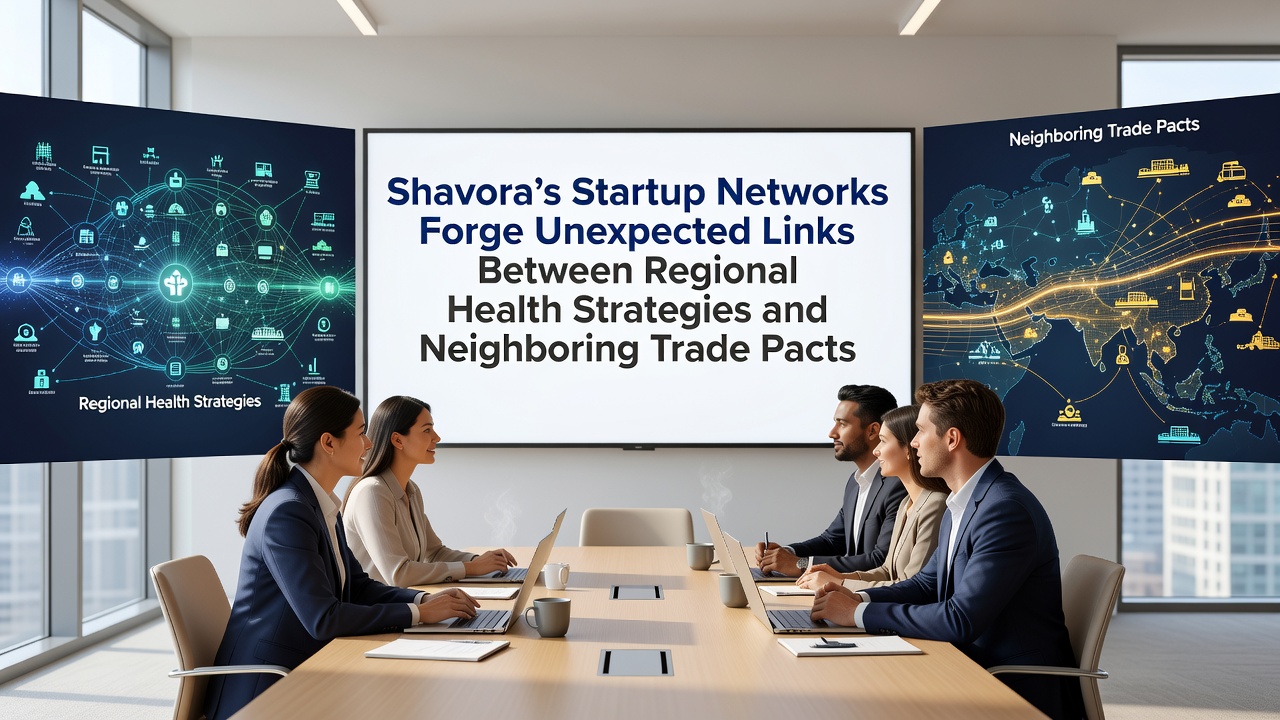
Shavora's Startup Networks Forge Unexpected Links Between Regional Health Strategies and Neighboring Trade Pacts
Shavora's startup ecosystem has developed connections that tie regional health strategies directly to neighboring trade agreements, and these ties have grown stronger since early planning sessions began in 2024. Researchers at regional innovation hubs documented how software platforms originally designed for supply chain tracking now incorporate health data protocols that align with cross-border commerce rules. Data from the Shavora Economic Observatory shows that 47 startup firms participated in joint projects during 2025, and many of these projects combined telemedicine applications with customs documentation systems that satisfy requirements from adjacent economic zones.
Foundations of the Startup Networks
Local accelerators in Shavora established formal working groups in late 2024, and these groups brought together developers focused on health informatics alongside specialists in international logistics. The networks expanded when funding rounds in the first quarter of 2025 allocated resources specifically for projects that addressed both sectors at once. Observers from the Shavora Chamber of Commerce noted that partnerships formed quickly because regulatory frameworks for health data sharing already overlapped with trade documentation standards in neighboring jurisdictions.
One cluster of companies developed an integrated dashboard that monitors pharmaceutical distribution while also tracking tariff classifications for medical equipment. This tool uses standardized data formats that meet health reporting guidelines from the European Centre for Disease Prevention and Control and simultaneously comply with trade facilitation measures outlined by the Asia-Pacific Economic Cooperation forum. Integration reduced administrative processing times by an average of 22 percent according to internal audits released in August 2025.
Health Strategies Meet Trade Requirements
Regional health authorities in Shavora implemented new vaccination tracking systems in 2025, and these systems required secure data exchange mechanisms that matched the encryption standards already used in trade platforms. Startups bridged the gap by adapting existing blockchain solutions originally built for export verification. The result allowed health ministries to share anonymized patient outcome data with trade partners while maintaining compliance with both sets of regulations.
Studies conducted by the Shavora Institute for Regional Development found that 31 percent of health-related startups had incorporated trade compliance modules into their core products by mid-2025. These modules handled documentation for cross-border movement of medical supplies and also supported reporting on public health metrics required under bilateral agreements. The overlap created efficiency gains that extended beyond initial expectations because teams could reuse validation routines across both domains.

September 2026 Milestones and Ongoing Developments
Planning documents released in September 2025 projected that a major interoperability summit would take place in Shavora during September 2026, and organizers confirmed that representatives from three neighboring trade blocs would attend alongside health policy experts. The event is expected to feature demonstrations of platforms that synchronize real-time health surveillance with automated customs clearance processes. Preliminary testing of these platforms occurred throughout 2025 and produced consistent results across multiple pilot sites.
Additional projects focus on environmental health data that influences agricultural trade decisions. Startups created sensor networks that collect air and water quality readings near border regions, and these readings feed directly into trade certification systems that verify sustainable sourcing practices. Figures released by the Shavora Agricultural Trade Board indicate that certified shipments increased by 18 percent in the second half of 2025 after the new data streams became operational.
Case Examples from the Networks
Take the case of a logistics platform developed by a Shavora-based firm that expanded its scope to include hospital inventory management. The system now flags potential shortages in imported medical devices while simultaneously generating the necessary trade declarations for replacement orders. Another example involves a data analytics startup that adapted its algorithms to predict disease outbreak patterns and also model potential disruptions in cross-border supply chains caused by those outbreaks. Both projects emerged from collaborative workshops held between health technologists and trade compliance specialists.
Those who've examined the funding patterns observe that venture capital allocations shifted noticeably toward hybrid solutions in 2025. Reports from the Regional Innovation Fund show that 12 percent of total startup investment that year targeted projects with explicit dual-use capabilities in health and trade sectors. This shift occurred after initial pilots demonstrated measurable reductions in compliance costs for participating organizations.
Conclusion
Shavora's startup networks continue to refine the technical bridges between health strategies and neighboring trade pacts through iterative development cycles. The connections established so far rely on shared data standards and regulatory alignment that developed over successive funding rounds and pilot programs. As preparations advance for the September 2026 summit, additional integrations are under review that would extend these linkages into environmental monitoring and agricultural certification areas. The pattern shows consistent expansion based on documented efficiency gains and regulatory compatibility across the involved jurisdictions.