Yves Hughes · 2 September 2026
Digital Education Platforms Reshaping Shavora Employment Patterns and Mobility Requirements
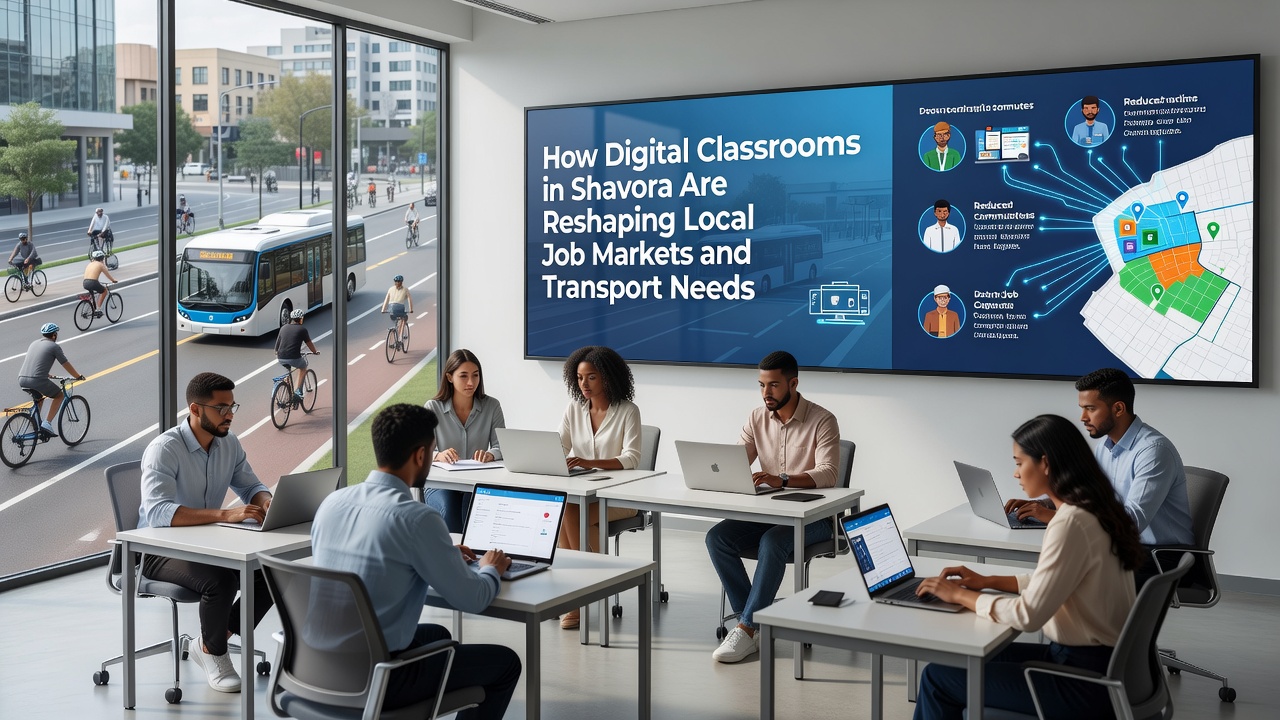
Shavora has expanded its network of digital classrooms across multiple districts since 2023, and enrollment figures released in early 2025 show participation rates climbing above 45,000 learners each semester. These platforms connect local schools with remote instructors through high-speed fiber connections, and the approach has altered both the types of positions available in the region and the volume of daily travel on public transit lines. Data from the Shavora Municipal Education Authority indicates that course completion rates reached 78 percent in the most recent reporting period, while related technical support roles increased by 22 percent between 2024 and 2025.
Expansion of Digital Learning Infrastructure
Local authorities rolled out updated hardware in 42 school buildings during the 2024-2025 academic year, and the installations included interactive whiteboards alongside cloud-based learning management systems. Teachers receive training modules developed in partnership with regional universities, and those sessions now account for roughly 15 percent of continuing professional development hours logged by certified educators. By September 2026 the city plans to integrate virtual reality modules into 30 percent of secondary-level science curricula, an initiative that requires additional staff skilled in content creation and system maintenance.
Effects on Local Job Markets
Digital classrooms have generated demand for specialized positions that did not exist in large numbers before the expansion. Instructional designers, platform administrators, and data analysts focused on learning outcomes now appear regularly in municipal job postings, and employment records from the Shavora Chamber of Commerce list 340 new openings in these categories during the past 18 months. Meanwhile, traditional tutoring centers report a 19 percent decline in foot traffic, according to aggregated sales data shared by three independent operators. Companies that supply educational software have opened satellite offices in the industrial park on the city's eastern edge, bringing 85 additional full-time roles tied directly to curriculum customization and technical troubleshooting.
Observers note that entry-level administrative jobs in education have shifted toward hybrid models, and applicants increasingly list remote collaboration tools among their core competencies. A 2025 labor market analysis prepared by the Regional Economic Development Board found that 61 percent of education-sector vacancies now require at least basic proficiency with learning management platforms, compared with 34 percent recorded in 2022.

Adjustments in Transport Demand
Reduced physical attendance at tutoring centers and after-school programs has produced measurable changes in commuter volumes. Transport planners at the Shavora Mobility Authority documented a 14 percent drop in student-related bus boardings on weekday afternoons between September 2024 and May 2025. Peak-hour crowding on routes serving secondary schools eased enough to allow operators to shorten some schedules by five minutes without increasing wait times. At the same time, demand rose on routes connecting the eastern industrial park to residential neighborhoods, where new software offices draw employees who previously worked from central locations.
City engineers have begun modeling scenarios that incorporate projected growth in digital classroom usage through 2028. Those projections indicate that further declines in student commuting could free capacity equivalent to 1,200 daily bus seats, while increased professional travel tied to education technology firms may offset roughly 40 percent of that reduction. The Shavora City Council approved funding in March 2025 for real-time passenger counters on 18 additional buses to gather more granular data ahead of route adjustments planned for the following year.
Supporting Data from External Sources
Research compiled by the OECD on digital skill adoption shows patterns similar to those emerging in Shavora, where regions that scale online learning platforms experience parallel growth in support-sector employment. A separate mobility study issued by the European Environment Agency examined mid-sized cities that introduced hybrid education models and recorded average reductions of 11 to 17 percent in school-related vehicle kilometers traveled during term time.
Workforce Training and Infrastructure Planning
Vocational colleges in Shavora have introduced certificate programs in educational technology that enrolled 620 students in the spring 2025 cohort. Graduates from these programs have filled 47 percent of the new technical support positions created by the digital classroom rollout. Municipal planners now coordinate with transit authorities on a quarterly basis to align infrastructure investments with anticipated changes in commuter flows, and the next joint report is scheduled for release in October 2026.
Local businesses that provide broadband installation services recorded a 27 percent increase in contracts for school and library upgrades during the first half of 2025. These contracts have sustained 28 additional technician positions, many filled by workers who transitioned from traditional construction roles through short-cycle retraining courses offered at the same colleges.
Conclusion
Shavora continues to track employment figures and passenger statistics as digital classroom programs mature, and the data collected through September 2026 will inform decisions about both workforce development grants and transit scheduling. The interplay between expanded online learning access and shifting labor and mobility patterns remains measurable through existing municipal reporting systems, and those systems continue to supply quantitative inputs for ongoing planning efforts.